CINEMOTION.UK · THE MAP
EVERYrite.
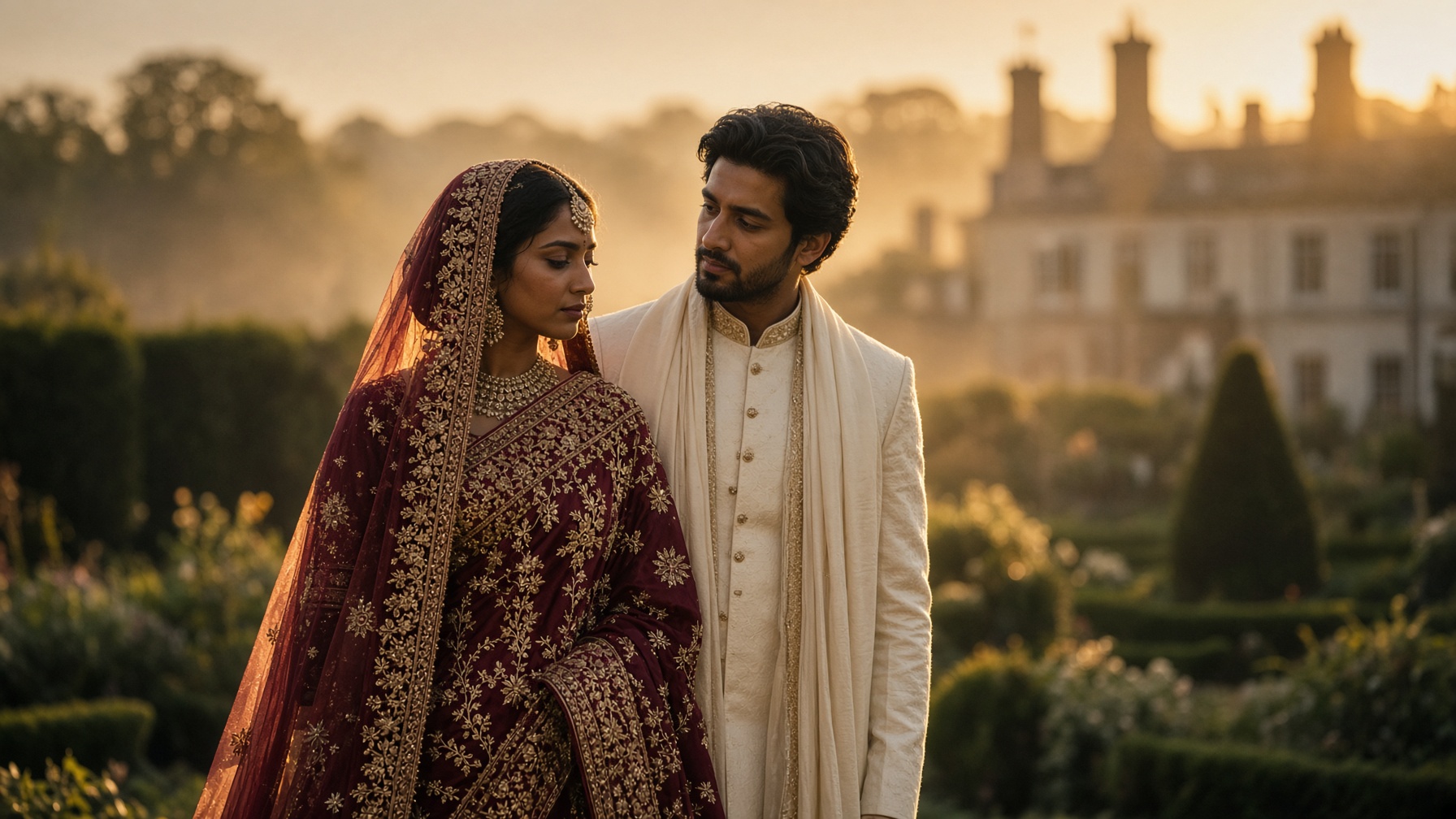
Hindu, Sikh and Muslim weddings, as they are filmed in London halls and English houses. The index, then the chapter.
A TRADITION
Hindu
Not one ceremony. Paste, dance, a street, a fire, and a car door. North Indian, Gujarati, Bengali and Tamil days do not share an order. Film the family in front of you.
01
The chapterRoka
Sagai, the families’ yes
A living room or a small hall. Rings, a tray, an elder’s hand. One camera at seated height. The tray enters before the faces. Do not build an entrance for a rite designed for a sofa.
02
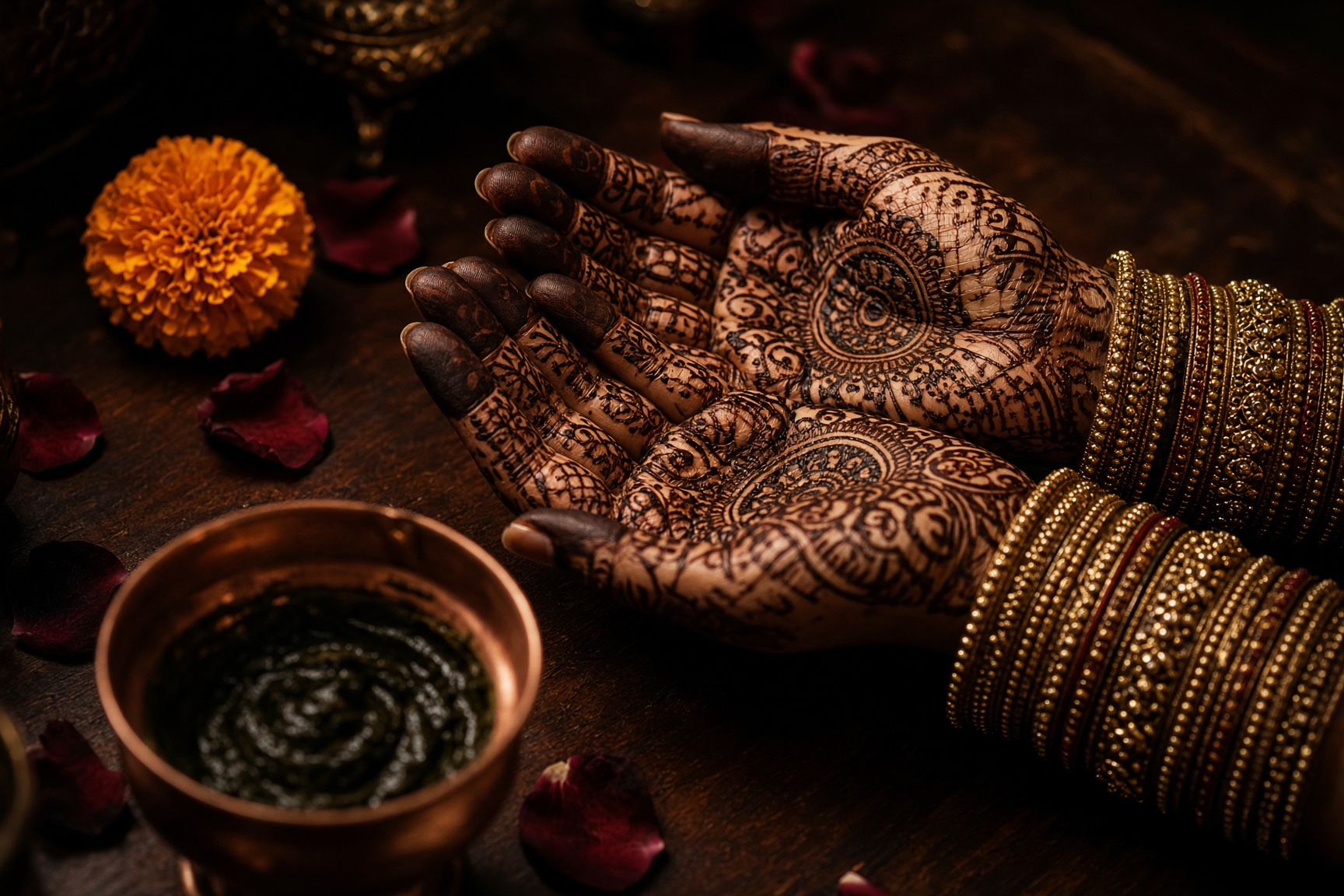
The chapterMehndi
Henna night
Two speeds: the cone on the palm, and the dhol later. Hold the wet design. A low gimbal can live on the dance floor and should not live on her face. Protect marigold yellow in the grade.
03
The chapterHaldi
Pithi, ubtan
Turmeric in daylight. A rain cover, nothing you cannot wipe. The cinematic frame is the quiet after the paste, not a second throw you asked for. Let the yellow stay yellow.
04
The chapterSangeet
The night of performances
Choreography needs a wide that does not wander, and a long lens for the person who was not supposed to cry. Expose for the face when the LED wash arrives. The formation is the shot.
05
The chapterBaraat
The groom’s procession
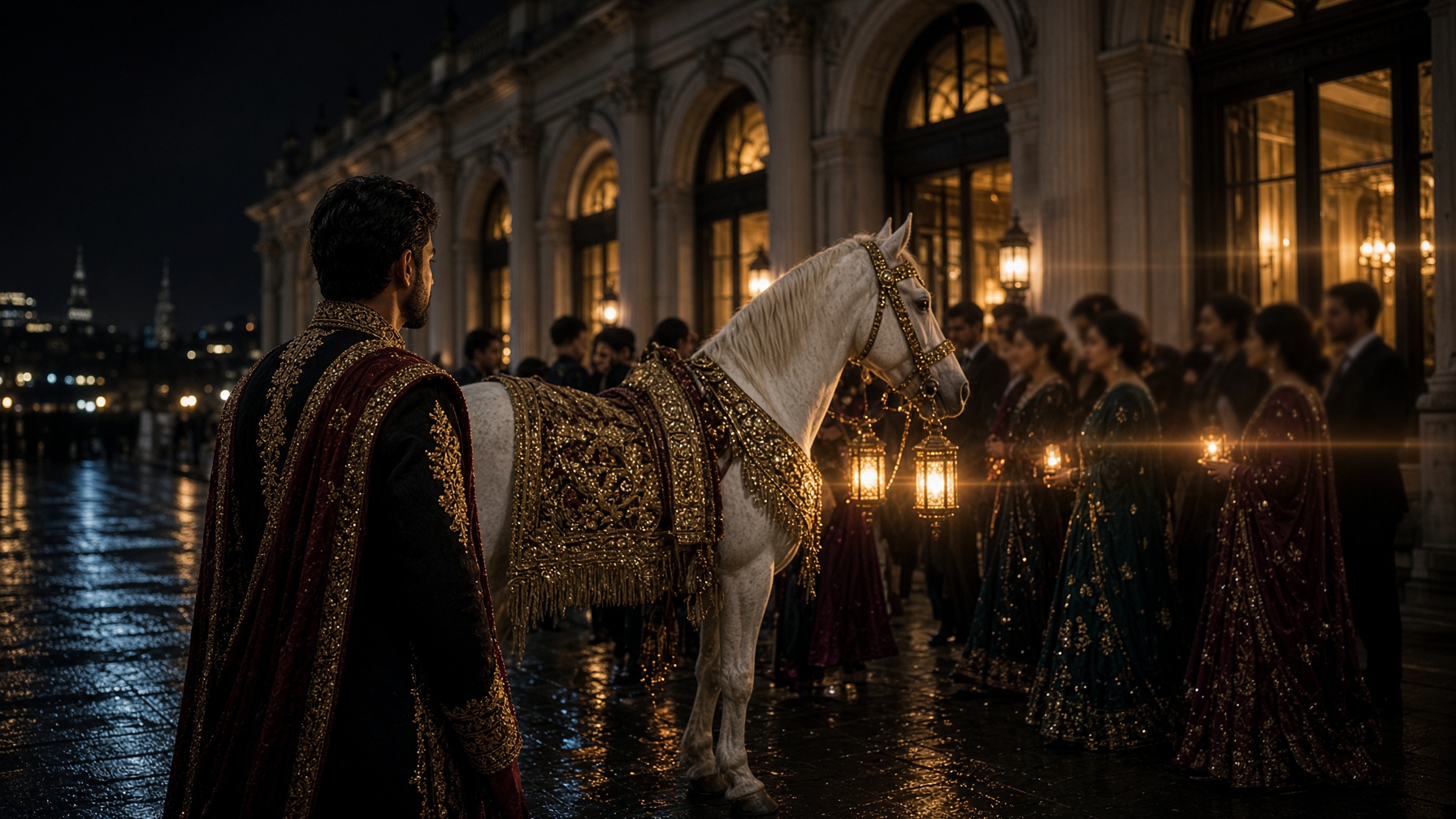
A road, a horse or a car, a dhol, and a facade. One camera ahead, one on the steps. In a manor that facade is the house. In London it is the hall door. Prefocus the arrival.
06
The chapterJaimala
Varmala, the garlands
A few seconds, often on a stage. Both garlands, both faces, the lift if there is one. Do not orbit. A locked wide and a long lens will both get it. A gimbal in the aisle will get neither.
07
The chapterMandap
Pheras, kanyadaan, sindoor, the fire
Ask which circuit this family counts as the marriage. Locked position. No flash on kanyadaan, the steps, sindoor, or the leaving. If the ceiling is listed, ask whether a fire is even allowed before you picture one.
08
The chapterVidaai
The leaving
The car door is the scene. Stay wide enough to hold the parent and the bride in one frame. Do not ask them to hug again. One take is the take.
09
The chapterReception
The party after the fire
A different grade from the mandap. The stage, the entrance, the first dance. Let the hall be a hall. Do not grade a London ballroom until it looks like a palace it is not.
A TRADITION
Sikh
The marriage is the Anand Karaj, in the presence of the Guru Granth Sahib. Many English manors can hold the milni and the dinner. They cannot invent the four laavan.
01
The chapterKurmai
The engagement
A formal yes between families. Small room, trays, a few sentences that matter. Treat it as the roka is treated: seated, close, no performance entrance.
02
The chapterChooda
The bangles
Red and white bangles, often at home, often emotional and quick. Hands, the person sliding them on, the mother’s face. A macro in the pocket beats a second body in the car.
03
The chapterSehra bandi
The groom’s veil of flowers
The sehra is tied before he leaves. It is a portrait and a ritual at once. Shoot the tying, then a still frame of him before the street swallows the detail.
04
The chapterBaraat
To the gurdwara
The procession ends at a threshold with rules. Cover heads before you are asked. The dhol stops being the subject when the Guru Granth Sahib is the room you are about to enter.
05
The chapterMilni
The meeting of the men
Garlands between corresponding men of the two families. It is a list, and it is also the moment a father meets a father. Names, if you can hear them. A long lens from the side, not a camera in the hug.
06
The chapterAnand Karaj
Four laavan
Four circuits. One chance each. Sit where you were told. No flash. The Guru Granth Sahib stays respected in the frame: not cropped, not used as background colour. Two sides of the palki if you have two operators.
07
The chapterDoli
The bride’s leaving
After the laavan, the family. Similar discipline to vidaai: wide enough, once, and then leave them alone. The gurdwara steps are not a second stage.
08
The chapterReception
The evening
Often a different building from the gurdwara. Cut it as a second place. The Anand Karaj is not a flashback you colour like a ballroom.
A TRADITION
Muslim
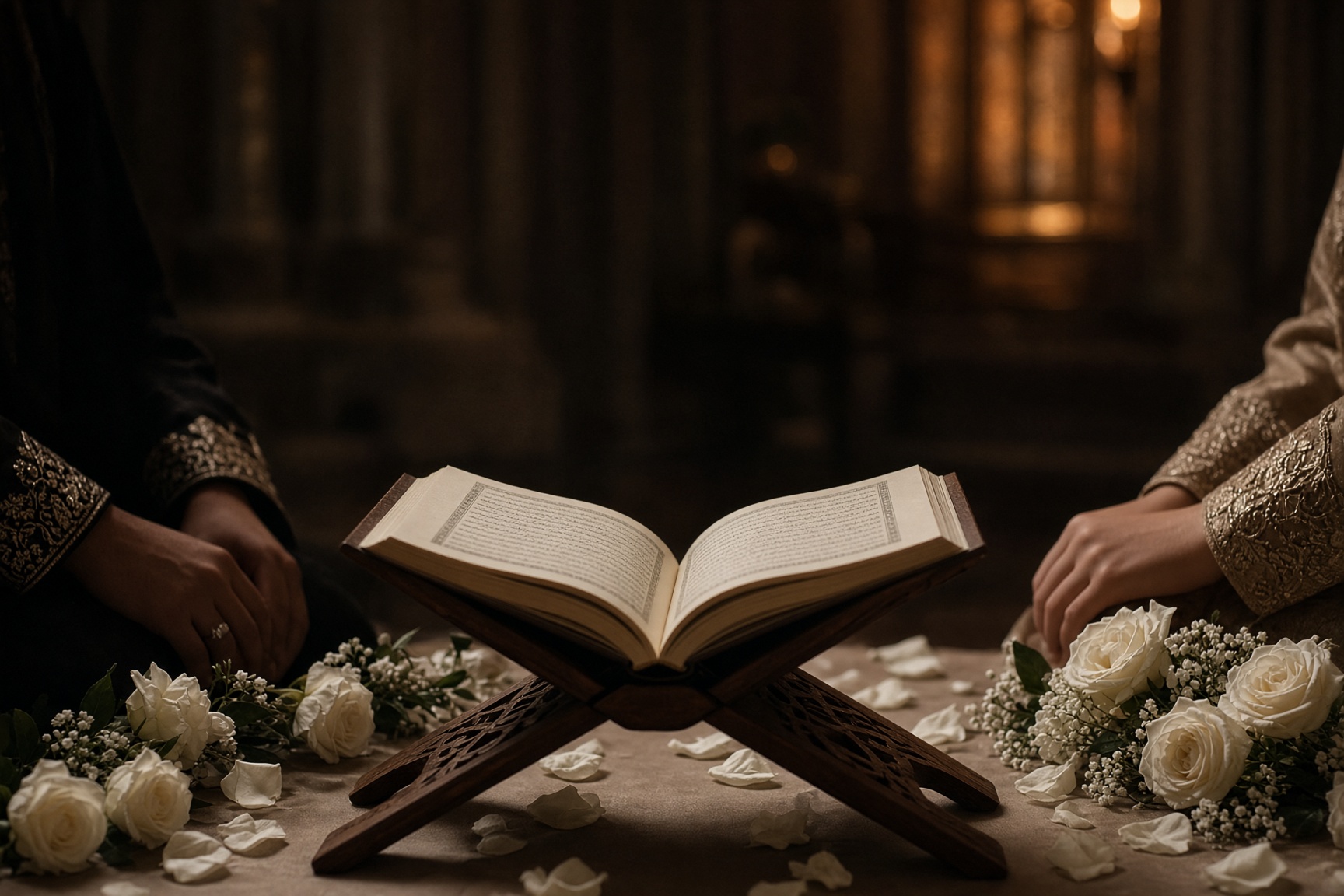
The nikah is the marriage. Mehndi, baraat and walima are the days around a contract. In many British Pakistani weddings the families do not share a room. Film the door you were given.
01
The chapterMangni
The engagement
A family agreement, often at home. Rings and a tray, elders, a short speech. Same rule as every small rite: do not make it louder than it is.
02
The chapterMehndi
The night before
Henna, a stage, live sets, and a hall that may not sit down. Hold the hands as well as the entrance. Yellows and greens are the grade. Skin stays under the dress, not the other way round.
03
The chapterMayun
The bride kept in yellow
Days of yellow, at home, before the hall. It is quiet on purpose. Window light, a sister, a bowl. If you only arrive for the ballroom you have missed the morning the family will actually rewatch.
04
The chapterBaraat
The arrival
Cars, sometimes a horse, always a dhol, and a hall door or a manor drive. The London minute — Meridian Grand, Ark Royal — is this entrance. One camera on the stairs, one in the procession.
05
The chapterNikah
Ijab and qabool
Often two rooms. The bride’s side and the groom’s side do not share a door. Two operators, two doors, and a way to hear the offer and the acceptance if you cannot see the officiant. Do not cross.
06
The chapterRukhsati
The sending
She leaves her family. It is the vidaai of this wedding and it is not a photo call. Wide, close enough to hear, and no second performance.
07
The chapterWalima
The groom’s feast
A second day, often a second hall, hosted from the groom’s side. Film it as its own film. The nikah is not improved by cutting the walima entrance over the qabool.
Before you book the day
- Where do I start on Cinemotion.uk?
- If you are booking the day, start with the venue desk and the piece on a London hall or a country house. If you are filming it, start with the field book, then the rite you have tomorrow. The reel is other houses, so you can see the standard.
- Does one order cover every Asian wedding?
- No. Hindu, Sikh and Muslim weddings are different marriages, and families inside each tradition do not share a timetable. The field book is three books. Shoot the event in the room.
- Can the Anand Karaj, the mandap and the nikah be filmed the same way?
- No. A mandap has a fire and a circuit the pandit will name. An Anand Karaj is four laavan in the presence of the Guru Granth Sahib, usually in a gurdwara. A nikah is a contract, often in two rooms. The locked camera is the only thing they share.